
Indian IT services firms are expected to report a soft Q1 FY27 performance due to a challenging macro environment, the impact of AI, and geopolitical uncertainties, leading to reduced discretionary spending and slower decision-making cycles, according to Motilal Oswal Financial Services.

Accenture's revised annual revenue growth forecast and weaker-than-expected fourth-quarter guidance have sent shockwaves through the Indian IT sector, causing major IT stocks and the Nifty IT index to tumble significantly.

'Our problem is not a budget deficit but a trust deficit. We need to trust our institutions and industries to innovate and lead. That is the way forward for India.'

The Nifty IT index hit a more than nine-month low, trading at its weakest level since April 17, 2025.
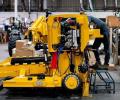
Indian engineering research and development (ER&D) players, such as Tata Technologies, Tata Elxsi, and Cyient, among others, had a subdued January-March quarter of 2023-24. The outlook for 2024-25 (FY25) also remains unexciting amid weak discretionary spending, prompting analysts to revise their growth expectations for the ongoing financial year (FY25).

'People are taking effort to train and adapt to current skills.' 'If that is not there, they are not useful to us.' 'They have to adapt to new technology, and what is important is learnability.'

Her reasoning is simple, "It's a Tata company. No shareholder will let go of this opportunity," she told Business Standard. When asked if the other reason for lining up for the IPO is the technology sector and the fact that the combination of Tata and tech is happening after almost two decades, she replied: "The name of the company and the group matter. Tata means stability and credibility," she added.
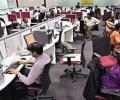
Mid-tier information-technology (IT) companies last financial year reported better growth numbers than their larger counterparts, highlighting their ability to navigate the uncertain macroeconomic environment. Most of these companies - such as Persistent Systems, Coforge, KPIT, and Mphasis - focus on niche businesses and industries that allow them to go deeper in terms of client mining and expanding wallet share from existing customers.

The previous two sessions have seen benchmark indices, the BSE Sensex and Nifty presenting signs of fatigue, reaching closer to its all-time highs level. Both indices are down approximately 1 per cent from recent highs and 2 per cent away from reaching a new peak. This has led to confusion on the street about its ability to reach another milestone. The present bullish trend in the leading indices; which has displayed smart recovery since late March this year, remains intact as the market breadth continues to stay elevated.


The July-September quarter results of software companies in the engineering research and development (ER&D) segment were broadly in line with expectations, though there have been cuts in revenue growth guidance. While results were a mixed bag, and there are cautionary views on the near-term outlook, brokerages and global consulting firms highlight the strong growth trajectory for the sector. They expect this segment of the software sector to grow by 8-12 per cent going forward.

These 10 stocks represent the best mix of value and growth, offering relatively low price-to-earnings and price-to-book ratios, a high return on equity, and sufficiently high potential from current levels.

With the Big Four information technology services players having disappointed the Street, the focus is on mid-cap IT players who seem to have met expectations, according to analyst reports and management commentary on the demand environment.

From powering mobile devices, US chip designer Qualcomm has tied up with Ola Electric to power its electric scooters. Qualcomm is providing the key 4G connected octa core android platform which provides connectivity, computing capabilities and enables rich immersive displays with power saving software.

The Nifty IT has been one of the worst-performing indices on the bourses this calendar year. Rising concerns of a potential global recession, which investors fear can dampen demand for export-facing domestic information technology (IT) giants, have sent the index down over 30 per cent on a year-to-date basis. By comparison, the Nifty50 Index has shed 2.8 per cent during the period, reveals data by ACE Equity.

Engineers based in India are estimated to be writing roughly 35 per cent of the 100 million lines of codes required to develop one fully driverless car for global vehicle makers.

The S&P BSE Sensex dropped 1 points to end at 26,396 and the Nifty50 slipped 2 points to end at 8,109.

Mid-cap information technology (IT) stocks dominate the list of companies that are trading significantly above their 200-DMA

With a million-odd electric vehicles (EVs) - two-wheelers, e-rickshaws, buses and passenger cars - expected to hit the road this calendar year, the shift from gasoline-powered vehicles has become irreversible. Now the question is whether the supply chain is ready for this shift. Key components - the high-powered lithium-ion battery and the cells which go with it, the electric motor, and the electronics powered by chips - account for nearly 60 per cent of the cost of an EV.

The second quarter of FY22 continued to show double digit growth for the top four IT services providers, with every vertical and geography growing well, even though the total contract value (TCV) looked soft for all the players. The trend was first evident in Accenture's Q4 numbers, which saw its TCV in outsourcing deals softer. A soft TCV does not mean that growth is declining, but it does point to the trend of few and scarcer mega deals.

After disappointing guidances in the first quarter (Apr-Jun) of the 2023-24 financial year (Q1FY24) and valuation downgrades, the Indian IT sector could see some positive repricing as the bad news for IT maybe easing in Q2FY24. A key negative factor was weaker demand from the US financial sector and from North America in general. The latest GDP (gross domestic product) estimates and sector-specific news suggest that the demand situation may not be quite so bad with a gradual recovery in tech spending in Q2.
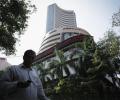
Side indices raced ahead with BSE Midcap and BSE Smallcap advancing 0.4% and 0.3% up, respectively.

Though the markets have lost ground since the past few sessions, analysts do not seem worried.

While such buying could indicate confidence in the business, investors should do a comprehensive evaluation before getting into the stock.

Mid-sized IT firms have stepped up hiring in the current fiscal year, adding more than half as many employees in the first quarter of FY19 as compared to the whole of the previous financial year. This momentum is likely to continue for the rest of 2018-19 (FY19) as well.

Most of the large mid-caps share similar business model as the large-caps and have more of less similar set of clients.

Ajit Mishra, vice president, research, Religare Broking, answers your queries.

Markets ended weak tracking the expiry of April derivative contracts.

In fact, we expect the first half of 2010 to be at least as challenging as the first six months of 2009, says Kishor Patil, MD & CEO, KPIT Cummins Infosystems.

n the broader market, both the BSE Midcap and Smallcap indices, were up 1.2% and 0.7% each.

The 30 share Sensex ended up 183 points at 27,470 and the 50-share Nifty gained 44 points to close at 8,295.

The 30-share Sensex ended down 339 points at 28,119 and the 50-share Nifty closed 100 points lower at 8,438.
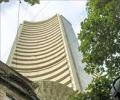
Sensex gained over 100 points and ended at 26147.33 while the Nifty ended 27 points higher at 7,795.75.

Headhunters and industry veterans reckon that as the job market opens up, the demand for non-engineering and other non-technical students is expected to be more than that was seen in the previous years.
US Senate's rejection of a bailout package for auto firms to impact revenues. None of the IT firms give any break-up of the exposure to the auto industry, but analysts said TCS offers services to clients such as Chrysler, Ferrari and Nissan.

Ajit Mishra, vice president, Research, Religare Broking, answers your queries.

Ajit Mishra, vice president, Research, Religare Broking, answers your queries.

Ajit Mishra, vice president, Research, Religare Broking, answers your stock market queries.

Mindtree, eclerx and Hexaware are trading at similar valuations to that of the larger peers.
